
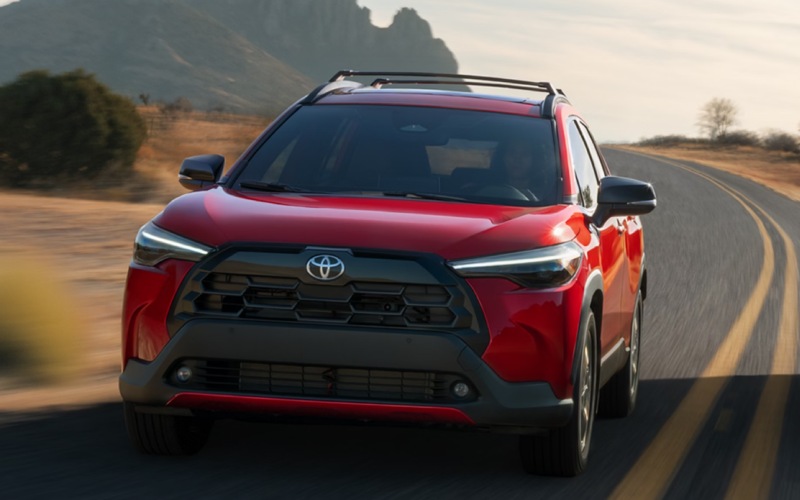
Glen Toyota - Which AWD System Fits Winter Streets Better, the 2026 Toyota Corolla Cross or the 2026 Honda HR-V around Glen Rock, NJ?
Drivers weighing all-weather confidence often ask a simple question: which AWD system better fits local winters, the one in the Toyota or the one in the Honda? It helps to look at how each system behaves when roads shift from rain to refreeze to slush within a few blocks. The Corolla Cross gives you two distinct paths: a gas model with available AWD or a hybrid with Electronic On-Demand AWD that adds a dedicated rear electric motor. That rear e-motor can apply torque quickly and precisely when the front wheels unload over ice or slush, and it does so without a driveshaft occupying cabin space. The HR-V’s available Real Time AWD™ with Intelligent Control System™ monitors conditions and transfers torque rearward when the fronts slip, pairing nicely with Snow Mode and Hill Descent Control for steady progress on steep or slick routes. Both approaches are smart, but their feel in the real world differs in ways you’ll notice from your first snowy morning launch.
Consider how winter plays out on side streets, where plows leave berms near driveways and myriads of stop signs sit at the bottom of short hills. The Corolla Cross hybrid’s rear e-axle wakes up instantly to push from behind while the front motors pull—an advantage on staggered, icy intersections or when half the vehicle sits on packed snow and the other half on wet asphalt. On the HR-V, Snow Mode tempers throttle response and sets the transmission to start in second gear to reduce wheelspin, and Hill Descent Control feels reassuring on frosty declines. Both are helpful, yet the Toyota hybrid’s added rear traction source changes the equation by introducing a second power channel that does not rely on engine torque routing alone. That difference is especially noticeable when you’re inching out from behind roadside snowbanks with just a car length to merge into traffic.
Key winter-daily features to compare:
- AWD architecture: Corolla Cross hybrid uses a rear e-motor for Electronic On-Demand AWD; HR-V uses a mechanical system that routes torque rearward as needed.
- Traction calibration: Toyota’s system can preemptively blend front pull and rear push; Honda’s Snow Mode reduces initial wheelspin and softens throttle input to stabilize launches.
- Braking assists: Corolla Cross includes Toyota Safety Sense™ 3.0 with Proactive Driving Assist; HR-V includes Honda Sensing® with Collision Mitigation Braking System™ and Road Departure Mitigation.
- Parking confidence: Corolla Cross offers Front and Rear Parking Assist with Automatic Braking; HR-V EX-L offers parking sensors with Low-Speed Braking Control.
- Ride height: Corolla Cross sits higher, helping clear curb ruts and leftover plow berms; HR-V rides lower for a planted feel on clean pavement.
Layered questions we hear often include whether winter capability requires the hybrid. The short answer is no—the gas Corolla Cross with available AWD is a strong match for varied conditions. The hybrid’s Electronic On-Demand AWD adds another dimension by sourcing torque from an additional motor at the rear axle, which can reduce the time between slip and support on patchy surfaces. Meanwhile, HR-V drivers who prioritize steady, predictable response will appreciate how Snow Mode and the multi-link rear suspension smooth out rough, salt-scored sections. Your ideal match comes down to how frequently you encounter mixed traction, how much you value extra ground clearance, and whether hybrid responsiveness appeals to your driving style.
For shoppers who juggle steep driveways, school drop-off lines with icy gutters, and parallel parking on salted curbs, taking both vehicles on a back-to-back route is illuminating. Plan a loop with stop-and-go launches, a mild hill, and a tight parking maneuver. Watch how the Corolla Cross hybrid’s rear axle engages from a standstill and how its higher stance changes your sightlines over snow piles. Then try the HR-V’s Snow Mode and Hill Descent Control and note the chassis calm in steady cruising. Both crossovers bring genuine capability; the Toyota’s second power source at the rear and ride height are tangible advantages when weather gets messy.
Glen Toyota is serving Hawthorne, Glen Rock, and Elmwood Park with transparent, hands-on test drives that replicate your actual winter routine. Our team will tailor routes, walk through Toyota Safety Sense™ 3.0 and Honda Sensing®, and help you map features to your daily life so your decision is confident, informed, and ready for the season ahead.
Frequently Asked Questions:
Do I need the hybrid to get AWD on the Corolla Cross?
No. AWD is available on gas models, while hybrid grades add Electronic On-Demand AWD with a dedicated rear electric motor for even quicker rear-axle support.
How does the HR-V’s Snow Mode help?
Snow Mode softens throttle response and starts the transmission in second gear to reduce initial wheelspin, helping you launch smoothly on slick surfaces.
Which crossover offers more winter ground clearance?
The Corolla Cross sits higher, which helps when clearing rutted curbs and packed snow left by plows.
What parking help can I get for tight city streets?
The Corolla Cross offers Front and Rear Parking Assist with Automatic Braking; the HR-V EX-L offers parking sensors with Low-Speed Braking Control.
Request more 2026 Toyota Corolla Cross information
Categories:
Toyota Corolla Cross