

Glen Toyota - Which Sedan Offers Better All-Weather Confidence for Daily Driving Around Glen Rock, NJ?
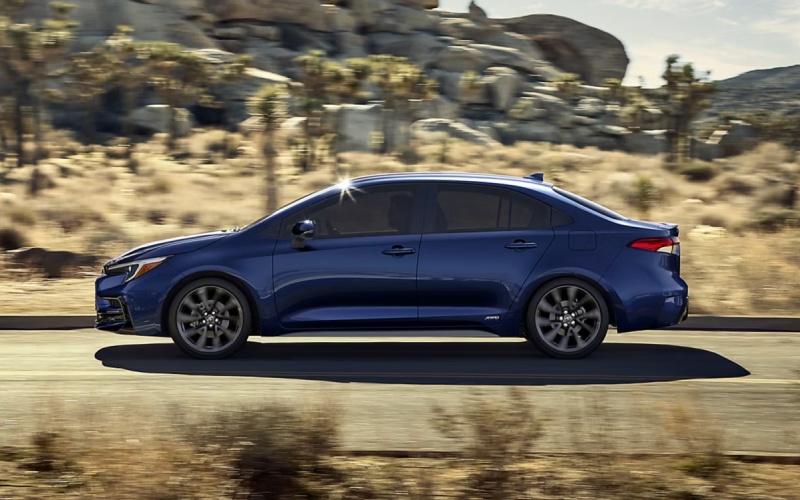
For many compact-sedan shoppers, one question keeps rising to the top: which model delivers better all-weather confidence for daily driving, the Toyota Corolla or the Honda Civic Sedan? In a region where fall rain, winter slush, and spring downpours can all arrive in a single week, the difference between front-wheel drive and available all-wheel drive feels significant. That’s where the 2026 Toyota Corolla separates itself. Corolla Hybrid models offer available Electronic On-Demand All-Wheel Drive that can send power to the rear wheels instantly when front slip is detected, helping you pull away cleanly from a stoplight, maintain composure on a crowned back road, and feel planted when you merge on a wet highway. The 2026 Honda Civic Sedan remains front-wheel drive only, including its hybrid variants, which means traction management depends solely on the front tires when conditions deteriorate.
All-weather confidence isn’t only about traction. It’s also about the way driver-assistance systems, lighting, and cockpit information reduce effort on days when visibility and grip fluctuate. Every Corolla includes Toyota Safety Sense™ 3.0, combining features such as Pre-Collision System with Pedestrian Detection, Lane Tracing Assist, Full-Speed Range Dynamic Radar Cruise Control, Automatic High Beams, and Road Sign Assist. The aim is to help you stay centered, maintain safe following distance in traffic, and see and interpret the road environment sooner. Within the cabin, available features like the 12.3-in. Digital Gauge Cluster and the 10.5-in. Toyota Audio Multimedia touchscreen make it easy to keep essential information in view while wireless Apple CarPlay® and Android Auto™ keep your maps, calls, and messages connected without clutter. The Civic Sedan counters with the Honda Sensing® suite, a helpful rearview camera, and an available 10.2-in. digital cluster on top trims, but the overall interface scale and traction options favor Corolla for the kind of mixed-weather driving local commuters face.
Layered questions often follow: What difference does an all-wheel-drive hybrid make on real roads? How do safety features translate into fewer surprises when conditions change quickly? And does the infotainment system reduce friction during busy mornings? Consider the following practical lens.
- Starting and climbing in slippery conditions: Corolla Hybrid’s Electronic On-Demand AWD uses a dedicated electric motor to drive the rear wheels on demand, reducing front-wheel spin on wet leaves, packed snow, or slick paint lines.
- Steering stability through standing water: Added rear-axle assistance helps the car feel more settled under light throttle as the system balances traction front to rear.
- Night and storm visibility: Automatic High Beams in Toyota Safety Sense™ 3.0 can increase forward illumination when conditions allow, then dip the beams to avoid glare for oncoming traffic.
- Driver workload in traffic: Full-Speed Range Dynamic Radar Cruise Control can help reduce fatigue on stop-and-go commutes, maintaining distance smoothly while you supervise the drive.
- Information clarity: The available 12.3-in. Digital Gauge Cluster in Corolla places alerts and navigation prompts in clear view, limiting glances away from the road.
Corolla’s approach threads purposeful traction with a calm, intuitive cockpit and a robust safety suite that assist together rather than as isolated features. Even outside of storms, the benefits show up on rutted city streets after a freeze-thaw cycle, or when an unexpected sun-shower pops up on your way to a dinner reservation. The Civic Sedan’s composed chassis will satisfy many drivers in fair weather, but when the forecast turns, having on-demand rear-axle assistance and a larger, clearer driver display can be the edge that keeps your day on schedule.
For shoppers comparing these sedans, the best advice is to match features to your real routes. Seek out a test drive that includes a mix of side streets, a brief highway segment, and a couple of imperfect intersections where sand and puddles linger. That’s where Corolla Hybrid with available AWD earns trust. If you want help selecting the right trim and tech to serve year-round needs, Glen Toyota is here with a low-pressure, informed approach, serving Hawthorne, Glen Rock, and Elmwood Park. Our team can set up a drive that mirrors your routine, review Toyota Safety Sense™ 3.0 in plain language, and show how the larger screens simplify everyday tasks without distraction.
Frequently Asked Questions:
Does the Corolla’s available AWD change how the car feels in dry weather?
Corolla Hybrid’s Electronic On-Demand AWD is designed to stay out of the way when conditions are good, adding rear-axle help primarily at launch or when slip is detected. In regular dry driving, the car retains a natural, balanced feel.
How do the driver-assistance suites differ for winter commuting?
Both cars offer advanced assistance. Corolla’s Toyota Safety Sense™ 3.0 brings features like Lane Tracing Assist and Full-Speed Range Dynamic Radar Cruise Control standard, while the Civic Sedan’s Honda Sensing® suite offers helpful lane and distance aids. The practical distinction is Corolla’s available AWD complementing those systems when the road surface is compromised.
Will the larger Corolla displays distract me?
The available 12.3-in. Digital Gauge Cluster and 10.5-in. Toyota Audio Multimedia touchscreen are configured to reduce distraction, not add it. Key information is legible at a glance, and wireless Apple CarPlay® and Android Auto™ help keep interactions short and familiar.
Request more 2026 Toyota Corolla information
Categories:
Toyota Corolla